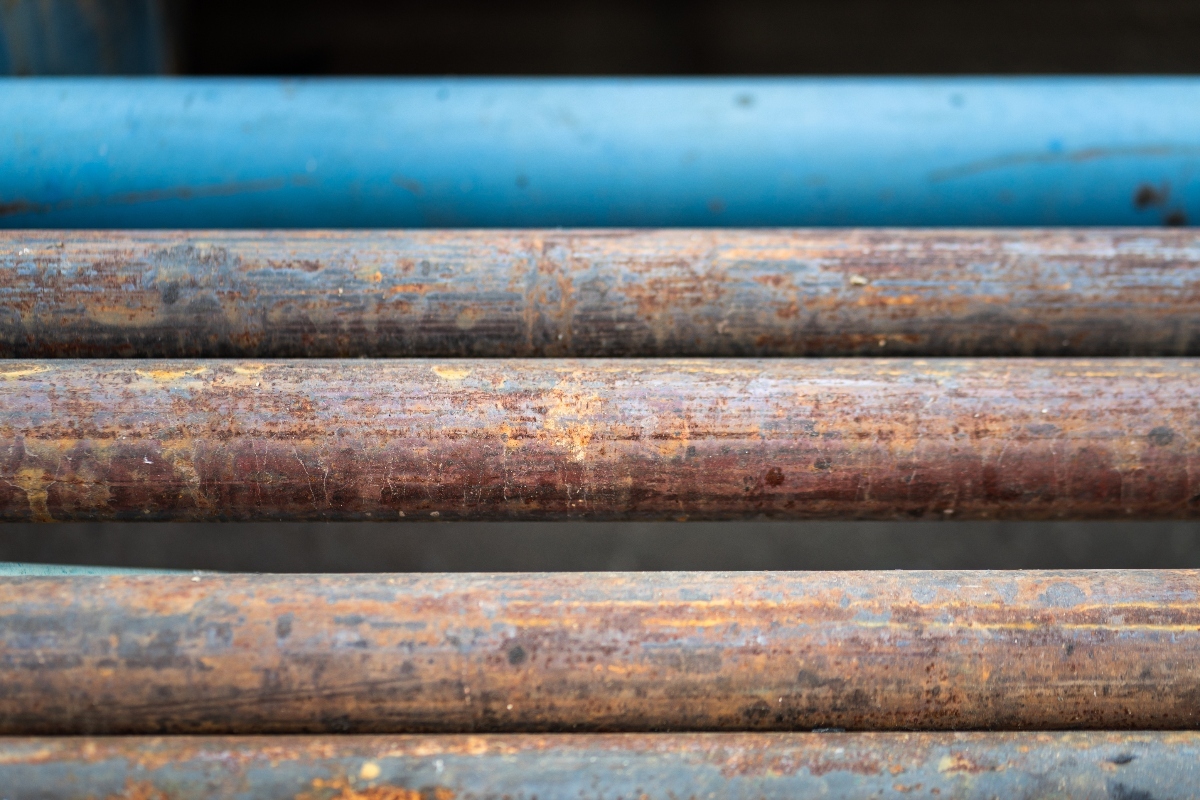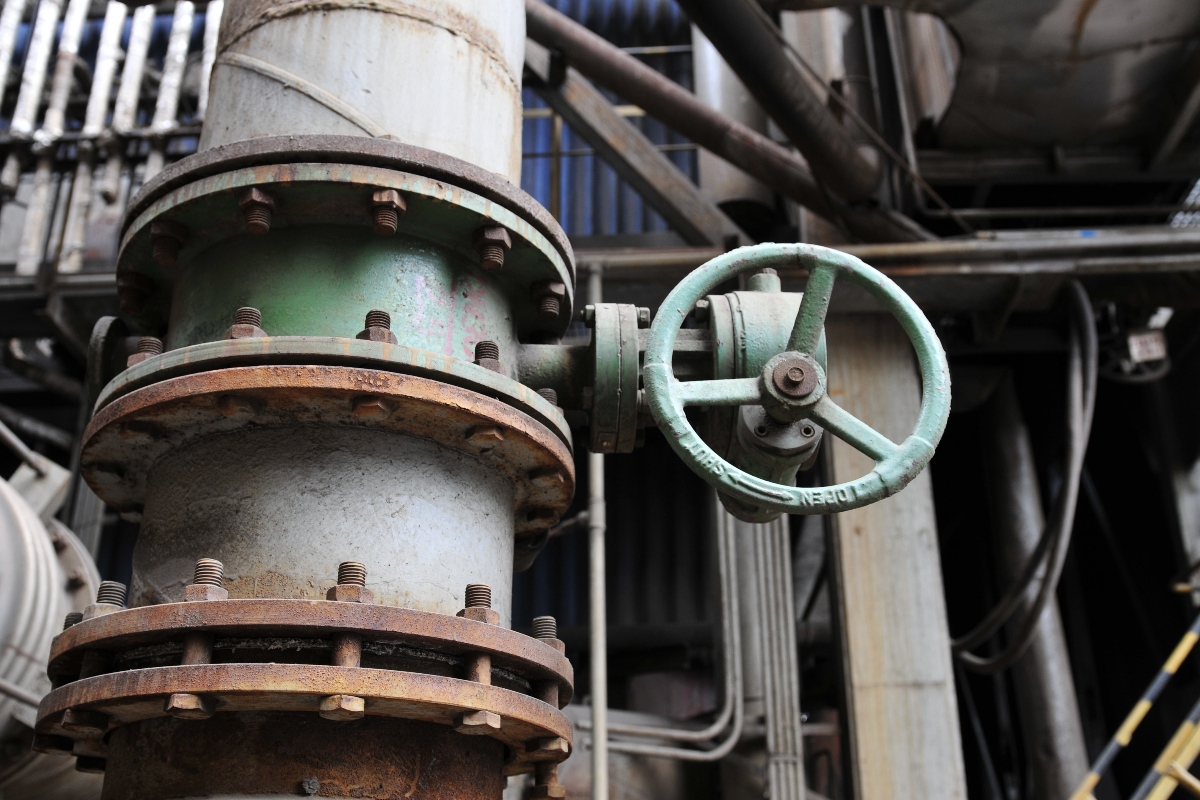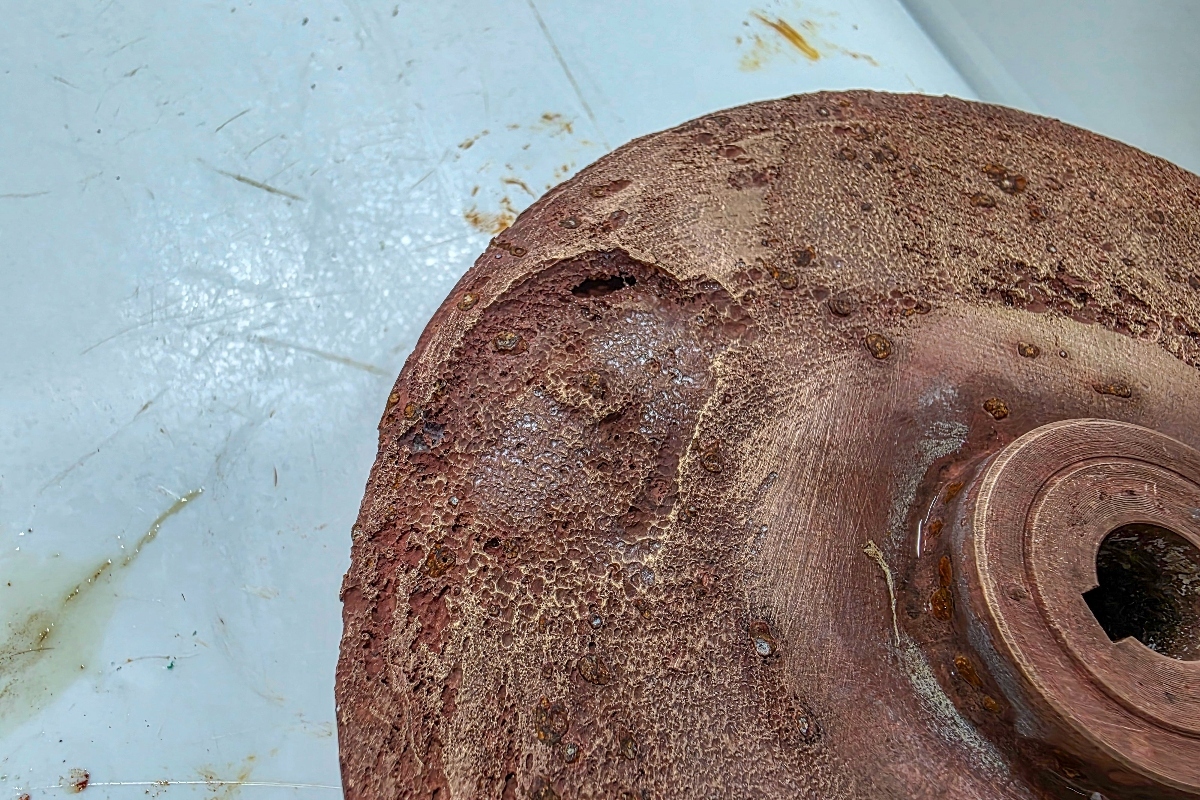
Low-alloy steel components operating in sour service environments often fail because hydrogen and H₂S attack the surface of the material long before the bulk material loses its structural strength.
In many cases, the root cause is not insufficient mechanical properties, but surface-driven degradation mechanisms such as sulphide stress cracking (SSC), hydrogen embrittlement, corrosion-fatigue interaction and localised surface damage.
Improving surface integrity and reducing hydrogen ingress can therefore significantly extend component life without requiring expensive upgrades to stainless steel or nickel alloys.
What happens to low-alloy steel in H₂S environments?
Low-alloy steel exposed to H₂S environments becomes vulnerable to hydrogen-assisted cracking, sulphide stress cracking and accelerated surface degradation because sour service conditions promote hydrogen ingress into the material. Low-alloy steels are widely used in:
- Wellhead and Christmas tree equipment
- Downhole tools
- Valve bodies and internals
- Hydraulic actuators
- Pump shafts and plungers
- Flow control systems
They remain popular because they combine these properties and benefits:
| Property | Benefit |
| High strength | Suitable for high-pressure systems |
| Good machinability | Easier manufacturing and repair |
| Cost efficiency | Lower cost than CRA materials |
| Availability | Broad supply chain compatibility |
However, in sour service environments containing hydrogen sulphide (H₂S), these steels face aggressive surface-driven degradation mechanisms that can lead to unexpected cracking and premature failure. NACE MR0175/ISO 15156 was specifically developed because many high-strength steels become susceptible to hydrogen-assisted cracking in H₂S-containing environments.
Why does hydrogen cause failure in low-alloy steel?
Hydrogen causes failure in low-alloy steel because atomic hydrogen diffuses into the material, accumulates around defects and reduces ductility and fracture toughness.
In sour service environments, corrosion reactions on the steel surface generate atomic hydrogen. Normally, some hydrogen recombines and escapes harmlessly. However, H₂S interferes with this process and increases hydrogen absorption into the steel itself. Once inside the material, hydrogen migrates through the metal lattice and accumulates at:
- Grain boundaries
- Inclusions
- Dislocations
- Areas of residual tensile stress
- Surface defects and micro-cracks
This weakens the material locally and makes it more susceptible to cracking under stress. Importantly, this process is often surface-initiated. Small imperfections on the surface can become the starting point for crack formation long before visible damage appears.
What is sulphide stress cracking (SSC)?
Sulphide stress cracking (SSC) is a hydrogen-assisted cracking mechanism that occurs when susceptible steels are exposed to H₂S under tensile stress. SSC is one of the most important failure mechanisms affecting low-alloy steel in oil and gas environments. Cracking typically initiates at the component surface where corrosion activity and stress concentrations are highest. Common initiation sites include:
- Machining marks
- Surface roughness
- Corrosion pits
- Coating defects
- Areas of localised wear
Unlike overload failure, SSC can occur at stresses below the material yield strength. This makes it especially dangerous because components may appear structurally sound externally while cracks continue propagating internally.
Why is surface condition critical for components in sour environments?
Surface condition is critical because hydrogen ingress, corrosion activity and crack initiation all begin at the component surface. In many sour service failures, the surface condition determines how quickly degradation accelerates. Surface damage creates a compounding cycle:
- Corrosion roughens the surface
- Roughness increases stress concentration
- Stress concentration promotes crack initiation
- Cracks expose fresh reactive metal
- Fresh metal accelerates hydrogen ingress
This feedback loop can rapidly reduce component reliability. This is one major reason why surface engineering plays such a significant role in extending component life in H₂S environments. Surface-related risk factors include:
- Poor surface finish
- Porosity
- Surface micro-cracking
- Wear damage
- Corrosion pitting
- Residual tensile stresses
Why don’t traditional protection methods always work?
Traditional protection methods can struggle because many coatings contain porosity, micro-cracks or weak binder phases that allow corrosive media and hydrogen ingress pathways to develop. Historically, engineers have relied on solutions like hard chrome plating, thermal spray coatings or costly material upgrades. It’s true that these approaches can improve performance, they also introduce major limitations.
Firstly, material upgrades increase cost and complexity, extend lead times and trigger expensive re-qualification requirements. So, for a lot of engineers, this is a last resort. When looking at traditional coating solutions, there are a number of limitations and effects involved:
| Limitation | Effect |
| Porosity | Corrosive ingress pathways |
| Micro-cracking | Crack initiation sites |
| Binder degradation | Surface roughening |
| Line-of-sight application | Unprotected internal surfaces |
One key example of this are thermal spray tungsten carbide coatings. They often use cobalt binders that can degrade in corrosive environments, leaving rough and abrasive surfaces behind.
Solving surface-driven failure in sour service
For low-alloy steel components exposed to hydrogen and H₂S, the most important lesson is that failure often begins at the surface. Hydrogen ingress, corrosion pitting, sulphide stress cracking and surface wear can all interact, creating localised damage long before the bulk material loses its mechanical strength.
This means the answer is not always to replace low-alloy steel with more expensive alloys. In many applications, the smarter route is to protect the surface where degradation begins, while retaining the strength, machinability and cost advantages of the original material.
Hardide CVD coatings provide a go-to surface engineering solution for low-alloy steel components operating in sour, abrasive and corrosive environments. By forming a dense, uniform and effectively pore-free tungsten carbide/tungsten layer, Hardide helps reduce surface degradation, protect complex geometries and extend component life in the environments where conventional protection methods often reach their limits. Download our guide below to find out more.