Corrosion presents a persistent threat to the integrity, safety and lifetime performance of industrial assets in sectors such as oil & gas, chemical processing, marine and power generation. The series of standards developed by NACE International (now part of the Association for Materials Protection and Performance, AMPP) provide a rigorous framework to manage corrosion risk through material specification, design, inspection, mitigation and maintenance.
In this article we outline the core purpose of the NACE standards, key standards relevant to component coatings and sour service environments, how compliance is achieved and the implications for asset owners and coating specialists.
What is NACE?
Its role encompasses standard-development, professional certification and knowledge dissemination in corrosion control. In 2021 NACE merged with the Society for Protective Coatings (SSPC) to form AMPP.
NACE standards are consensus-based documents that define minimum practice for specific corrosion issues: material requirements, test methods, inspection practices, installation criteria and engineering controls.
They apply across many industries but are particularly critical in high-risk environments (for example, sour service upstream oil & gas) where failure modes such as hydrogen-induced cracking (HIC), sulfide stress cracking (SSC) and chloride stress corrosion cracking (CSCC) can undermine reliability.
Why compliance matters
- Industry studies estimate the global cost of corrosion at around US $2.5 trillion annually, or ~3% of global GDP.
- Non-compliance with relevant standards increases risks of leakage, unplanned shutdowns, equipment replacement and major safety or environmental incidents.
- Compliance supports robust procurement/contracts, risk management and asset lifecycle optimisation. It signals that design, materials and protective systems (such as coatings) meet credible engineering benchmarks.
Key NACE standards relevant to component coatings and advanced materials
There are several important standards and practices from NACE/AMPP that often apply in coating, metallurgy and corrosive-service contexts.
MR0175 / ISO 15156 - Materials for use in H₂S-containing environments in oil and gas production
This standard specifies requirements and environmental limits for materials exposed to hydrogen sulphide (H₂S) in oil and gas production systems. It defines acceptable hardness values, heat treatments and material compositions to minimise the risk of sulphide stress cracking (SSC) and hydrogen embrittlement. It is one of the most widely applied NACE standards across upstream operations.
MR0103 / ISO 17945 - Petroleum, petrochemical and natural gas industries
Applies to metallic materials used in refinery and downstream process environments containing H₂S. It complements MR0175 by defining mechanical property, hardness and fabrication limits for materials exposed to sour conditions in refining and petrochemical service.
SP21430-2019 - Framework for establishing corrosion management systems
This document provides the foundation for a corrosion management system (CMS), outlining the processes, responsibilities, and verification methods required to manage corrosion risk throughout an asset’s lifecycle. It emphasises continuous improvement, competency and data-driven maintenance.
TM0177 - Laboratory testing for sulfide stress cracking and stress corrosion cracking
A laboratory test method used to determine the resistance of metals and alloys to sulphide stress cracking (SSC) and stress corrosion cracking (SCC) in H₂S-containing environments. The standard defines test procedures such as bent-beam, tensile and C-ring methods for assessing cracking susceptibility under applied stress.
TM0284 - Evaluation of pipeline and pressure vessel steels for resistance to hydrogen-induced cracking
Specifies methods to evaluate susceptibility of steels to hydrogen-induced cracking (HIC) caused by hydrogen absorption during exposure to aqueous sulphide corrosion. It is commonly used for pipeline, vessel and component materials in sour service environments.
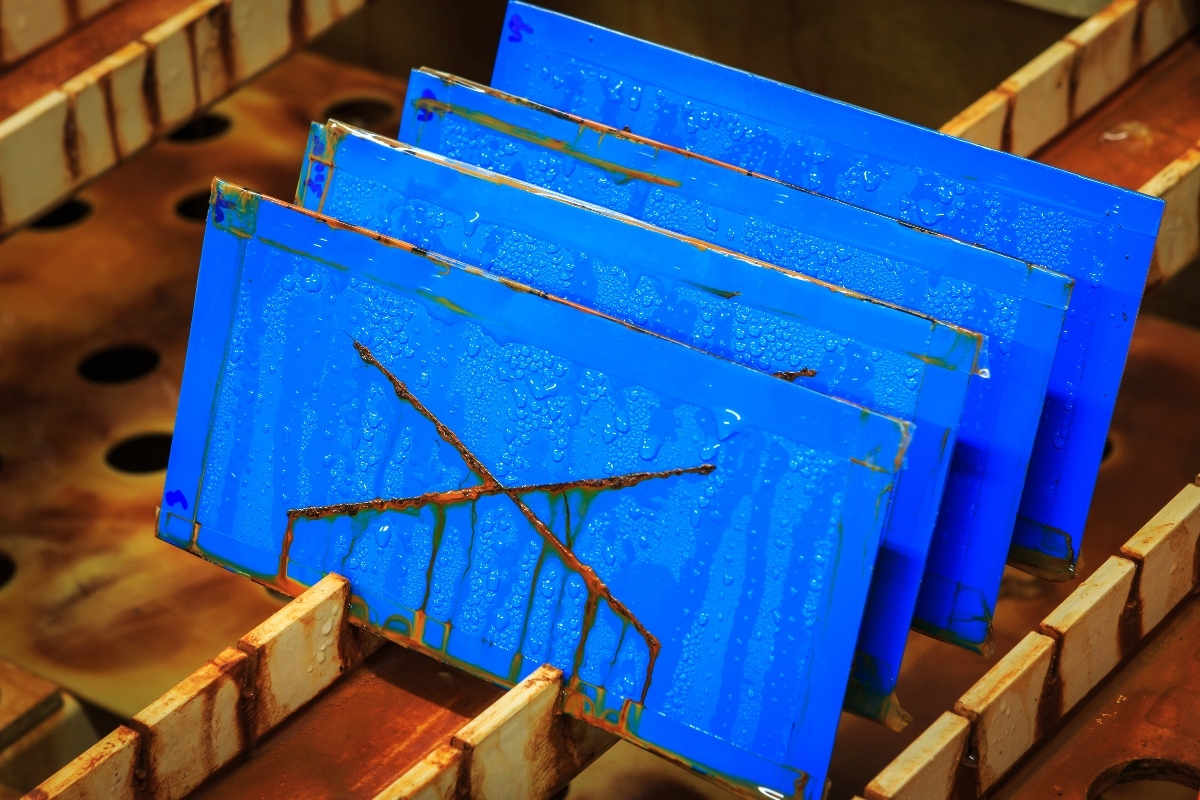
ASTM B117 Salt spray (fog) corrosion test
An internationally recognised accelerated corrosion test used to evaluate the protective performance of metallic coatings and surface treatments. The standard exposes test specimens to a controlled salt fog atmosphere, providing a consistent method for comparing coating performance under chloride attack. It is widely referenced alongside NACE standards for demonstrating corrosion resistance and coating integrity.
The value of compliant and trusted coating partners
Selecting coating suppliers and engineering partners that demonstrate proven compliance with NACE and related corrosion standards is essential to achieving lasting asset integrity. Partners that can verify their materials, processes and testing to recognised benchmarks provide assurance that every component has been engineered for safety, reliability and environmental accountability.
Compliance confirms that coatings have undergone rigorous independent assessment for performance in hydrogen-sulphide, saline or chemically aggressive conditions. Working with accredited specialists also simplifies certification, inspection and audit processes, supporting operators in meeting regulatory and contractual obligations while reducing the risk of premature failure and costly downtime.
Partner with an industry leading expert to maximise your component lifespan in corrosive environments
NACE standards provide a clear framework for preventing corrosion and maintaining asset integrity across global industries. Meeting those standards in practice depends on selecting partners with proven technical expertise and verified performance.
Hardide is that partner. Its advanced CVD tungsten-carbide coatings have been independently tested to NACE and ASTM standards, including TM0177 and B117, confirming outstanding resistance to corrosion, wear and cracking. With a strong track record in aerospace, energy and industrial applications, Hardide delivers coatings that combine durability and environmental responsibility to ensure components perform longer and more reliably in the harshest conditions.