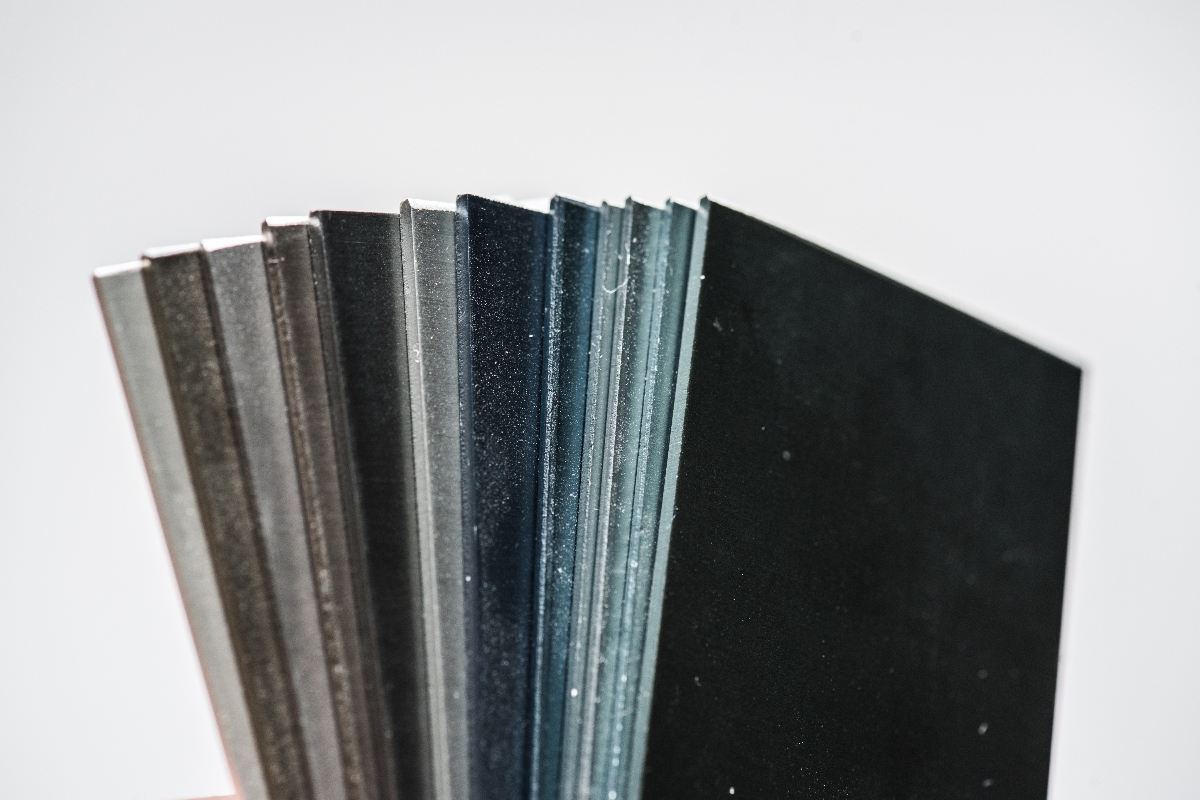
Surface treatments are often grouped together as if they serve the same purpose. In reality, processes like passivation and anodising solve very different engineering problems. Both are used to improve corrosion resistance, but they operate on different materials, involve different mechanisms, and deliver fundamentally different outcomes. Understanding these differences is essential when selecting the right process for a given application.
Two processes, two completely different approaches
Passivation and anodising are entirely different types of surface modification. Passivation is a chemical surface conditioning process. It removes contamination, particularly free iron, and enables the formation of a stable, protective oxide layer that already exists naturally on stainless steel.
Anodising, by contrast, is an electrochemical conversion process. It actively grows a thicker oxide layer on the surface of metals such as aluminium by using an electrical current in an electrolyte bath. In simple terms, passivation refines what is already there. Anodising creates something new.
Material compatibility defines the choice
One of the most common misconceptions is that these processes are interchangeable. In practice, they apply to entirely different materials.
Passivation is used for stainless steels and other corrosion-resistant alloys. Its role is to restore and stabilise the surface after manufacturing processes that may have introduced contamination.
Anodising is primarily used for aluminium. Aluminium naturally forms an oxide layer, but anodising thickens and strengthens that layer to improve durability, corrosion resistance and, in some cases, appearance.
Because of this, the decision between passivation and anodising is often made at the material selection stage. Once the base material is defined, the appropriate surface treatment follows.
What each process is designed to achieve
Although both processes improve corrosion resistance, they do so in different ways and for different reasons.
Passivation is focused on surface cleanliness and chemical stability. By removing free iron and contaminants, it reduces the risk of localised corrosion and ensures the stainless steel behaves as intended in service. The resulting oxide layer is extremely thin, but highly effective when properly formed.
Anodising is more about building a protective barrier. The oxide layer created during anodising is significantly thicker and can provide additional benefits such as wear resistance, electrical insulation and the ability to incorporate dyes for colour.
This difference in thickness and structure has practical implications. Passivation does not alter dimensions or surface finish in any meaningful way, making it ideal for precision components. Anodising, on the other hand, must be carefully controlled to account for dimensional changes introduced by the oxide layer.
Performance in demanding environments
In high-performance applications, the choice between passivation and anodising is driven by how components are expected to behave in service.
For stainless steel components exposed to corrosive media, passivation ensures that the surface is chemically stable and free from contamination that could initiate corrosion. Its effectiveness depends heavily on proper surface preparation and process control.
For aluminium components, anodising provides a more substantial barrier against environmental exposure. However, it does not address contamination in the same way passivation does, nor is it suitable for steels. The key point is that these processes are material-specific tools designed to solve different surface challenges.
Choosing the right process for the application
Selecting between passivation and anodising is about alignment between material, environment and performance requirements.
If the component is stainless steel and requires reliable corrosion resistance without altering dimensions, passivation is the appropriate choice. If the component is aluminium and requires a thicker protective layer with additional functional or aesthetic properties, anodising is more suitable.
In both cases, the process must be specified and controlled in line with relevant standards and validated through testing.
Engineered surface preparation for consistent passivation
For stainless steel components, passivation only delivers reliable results when it is supported by controlled surface preparation.
Achieving this starts with complete removal of contaminants. Advanced cleaning processes ensure that oils, residues and oxides are eliminated not only from external surfaces, but also from internal features and non-line-of-sight areas. This creates the chemically clean foundation required for consistent passivation. To achieve uniform, high-integrity results, the process must ensure:
- Complete contaminant removal: Eliminating both organic and inorganic residues that can interfere with passivation
- Access to complex geometries: Ensuring internal channels, threads and blind features are treated as effectively as external surfaces
- Consistent surface condition: Avoiding local variations that can lead to corrosion initiation points
- Controlled process parameters: Delivering repeatable results across both individual components and production batches
When integrated into a wider workflow that includes precision cleaning and, where required, further surface treatments or coatings, passivation becomes a reliable and repeatable step in delivering long-term component performance.
Precision surface engineering you can rely on
Achieving reliable corrosion resistance is all about how well that process is controlled. Passivation, in particular, depends on complete surface preparation, consistent treatment of complex geometries and tightly managed process parameters. Without this level of control, even the right specification can lead to inconsistent performance in service.
Hardide approaches passivation as part of a fully integrated surface engineering system. Advanced cleaning processes ensure components are chemically clean before treatment, while precision-controlled parameters deliver repeatable results across both simple and highly complex parts. Internal features, threads and non-line-of-sight areas are treated with the same consistency as external surfaces, reducing the risk of localised corrosion and variability.
By combining this level of process control with the ability to integrate further treatments, including advanced CVD coatings, Hardide delivers more than just compliance with specifications. It provides a reliable, end-to-end solution that improves surface integrity, supports coating performance and extends the operational life of critical components in demanding environments. Visit our dedicated page below to find out more.